



DFI Traveling Lecturer
Lecture series runs from September 1 – August 31
The DFI Traveling Lecturer is a prominent industry expert selected annually to travel and present a series of lectures to university students, professional groups and industry associations. The DFI Traveling Lecturer program promotes the field of geotechnical engineering and deep foundation construction by
- Encouraging students to explore a career in the deep foundations industry
- Providing information on topics of interest to members of the industry
- Raising awareness of how DFI and its activities support the industry
Please feel free to reach out to us with any questions on our Traveling Lecturer series.
Nominate a Lecturer
Nominations from DFI membership for the 2027 – 2028 lectures will be accepted until March 15, 2027. All nominations received after March 15 will be considered the following year.
2026 - 2027 DFI Traveling Lecturer
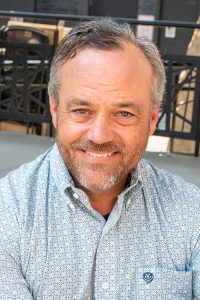
Howard A. Perko, Ph.D., P.E.
Magnum Piering
Howard A. Perko, Ph.D., P.E., is Director of Engineering at Magnum Piering, where he leads technical strategy, product innovation, and engineering support. In this role, he guides research and development efforts while mentoring engineering, technical sales, and customer support teams.
Dr. Perko is a licensed professional engineer in 18 states, holds seven patents, and has authored over 70 technical publications, including the widely recognized textbook Helical Piles (Wiley, 2009). His work bridges theory and practice, helping engineers better understand soil–structure interaction and improve deep foundation design reliability in challenging ground conditions. He is an inductee of the Academy of Civil Engineers at Michigan Technological University and an adjunct professor at Colorado State University.
A dedicated member of DFI for nearly three decades, Dr. Perko was Master of Ceremonies, annual conference chair, technical reviewer, committee chair and secretary, specialty conference chair, member of the Board of Trustees, and currently on the Educational Trust Board. Known to colleagues as “Howie,” he is recognized for his sense of humor, engaging teaching style, and commitment to advancing the profession.
2026 - 2027 Lecture Topics
Evolution of the Global Application of Helical Piles
This lecture presents the evolution of helical piles from their early use in 19th century marine structures to their widespread adoption as a modern deep foundation system. Drawing on case histories and published work, the discussion highlights how advances in installation equipment, torque-based capacity verification and building code recognition have transformed helical piles from a niche solution into a reliable and widely accepted foundation alternative.
Examples from projects around the world illustrate how helical piles have been successfully applied to support residential, commercial, industrial and infrastructure systems in a wide range of subsurface conditions. Particular emphasis is placed on the practical advantages that have driven this global expansion, including rapid installation, minimal site disturbance and the ability to verify capacity during construction.
The lecture concludes with observations on current trends and future opportunities, including sustainable construction practices, material efficiency, and emerging applications in energy and infrastructure. The goal is to provide engineers with a clear understanding of when and why helical piles are an effective solution, and how lessons from past projects continue to shape modern design and construction practices.
Deep Foundation Failures and Engineering Fixes
This lecture examines failures of deep foundation systems through the lens of real project case histories, including problems with driven piles in soft soils, drilled shafts in expansive soils, helical piles in consolidating fill, lateral torsional buckling and others. Drawing on 30+ years of experience, the discussion focuses on why failures occur in practice, emphasizing that most problems are not due to the foundation system itself, but to misapplication, incomplete understanding of soil behavior or lack of proper structural bracing.
Case histories include projects that led to significant consequences, such as a failure in New York City that resulted in a temporary moratorium on helical piles for seven years, as well as examples of progressive wall failures, excessive settlement and poor load test performance. These cases illustrate key engineering principles, including the importance of lateral bracing, stability during excavation, and the interaction between foundation elements and the supported structure.
The lecture highlights how failures often develop as part of a system response rather than a single isolated issue, and how small oversights can lead to large-scale consequences. For each example, practical solutions are presented, including improved design approaches, construction practices and quality control measures.
The goal is to provide engineers with a deeper understanding of failure mechanisms and, more importantly, how to recognize warning signs and apply sound engineering judgment to prevent problems before they occur.
Training Civil Engineers Project Management Using AI
This lecture draws on more than 18 years of teaching civil engineering project management at Colorado State University, where the course has evolved from a traditional overview of scheduling, contracts and financial controls into a broader training in professional judgment, communication and leadership. The focus is on how engineers learn to manage projects not just through tools, but through decision-making, negotiation, and understanding the business context of engineering work.
Over the past three years, the course has incorporated artificial intelligence as a core component of instruction. AI is introduced not as a replacement for engineering judgment, but as a tool to enhance learning, improve productivity and simulate real-world scenarios. Students use AI to support tasks such as building value profiles, risk identification, cost modeling and written communication, while also learning the limitations of these tools and the importance of verifying outputs.
A key element of the course is an interactive negotiation exercise in which students engage with an AI-driven counterpart to simulate owner–engineer discussions. This allows students to practice communication, strategy and adaptability in a setting that closely mirrors professional practice. The integration of AI into these exercises has expanded each year as both the technology and the instructor’s approach continue to evolve.
The lecture highlights lessons learned from this ongoing process, including how students respond to AI-assisted learning, how companies can effectively integrate these tools into technical training and how civil engineers can use AI to become more effective project managers. The goal is to provide a framework for combining technical training with professional skill development, preparing the next generation of engineers to lead projects in an increasingly data-driven and AI-enabled industry.
Lessons Learned from Geotechnical Engineering on the Moon, Mars and Comets
This lecture presents a history of geotechnical analysis, in-situ tests and laboratory experiments performed to date in conjunction with planetary exploration. Soil behavior in low gravity, ultrahigh vacuum and temperature extremes are discussed along with geologic processes on extraterrestrial bodies. Techniques used for subsurface exploration during missions to the Moon, Mars and comets are reviewed, including penetration resistance, trench wall stability, soil boring and sampling, nuclear density tests, plate bearing capacity, and the use of rover mobility data to infer soil strength.
Geotechnical studies from planetary missions illustrate how fundamental soil mechanics concepts extend beyond Earth, while also highlighting the challenges of working with limited direct observations and measurements. The lecture includes discussion of measuring Martian soil properties from orbit, the development and value of planetary soil mechanics maps, and the use and limitations of planetary soil simulants.
Planetary geotechnical studies demonstrate how engineers have adapted familiar geotechnical methods to operate under highly constrained conditions, often relying on indirect measurements and simplified models. These examples reinforce the importance of understanding basic soil behavior and applying sound engineering judgment when data are limited.
The lecture concludes by connecting planetary geotechnics back to terrestrial practice, emphasizing how insights gained from space exploration can inform foundation design, site characterization and problem solving on Earth. In alignment with the mission of DFI, the goal is to advance understanding of soil–structure interaction across a wide range of conditions and to encourage innovation in testing, interpretation and foundation engineering practice.
Dark Matter, Soil Matric Suction and the Art of Finding Common Ground
This lecture begins with an overview of dark matter and dark energy as they are understood from cosmological observations, including galaxy rotation and large-scale structure of the universe. The governing equations of general relativity are introduced to frame how mass, energy, and spacetime curvature are related, and why additional terms are invoked to explain observed behavior.
The discussion then shifts to unsaturated soil mechanics, where soil matric suction arises from surface tension of water between soil particles, producing apparent cohesion and controlling volume change and plasticity. The tensor-based mathematical framework used to describe these interactions is compared to formulations used in gravitational physics.
Parallels between the two fields are explored, including the fringe concept of spacetime surface tension. These comparisons are used to illustrate how similar mathematical structures can emerge in very different physical contexts.
The focus then shifts to differences in terminology across disciplines. Examples from metallurgy, physics and geotechnical engineering illustrate how similar mechanisms are described in different ways, often obscuring common understanding. The central message is that effective engineering depends on clear communication and shared language. Miscommunication on civil engineering projects can lead to errors and, in some cases, serious safety consequences.
The lecture concludes by emphasizing collaboration across disciplines and the value of integrating perspectives from geotechnical, structural, geological and construction professionals. In alignment with the mission of DFI, the goal is to encourage clearer communication, broader thinking and improved engineering practice.
Emergency Repair of I-65 Bridge over Wildcat Creek
In August 2015, the northbound lanes of Interstate 65 near Lafayette, Indiana, were closed over a 37-mile section when an existing bridge pier settled during driven steel pile installation at the Wildcat Creek bridges. Nicholson Construction was contacted to develop an emergency response. A review of the situation determined that the driven piling punctured an artesian aquifer. A design-build solution using micropiles was developed to underpin the existing pier. This presentation reviews the cause of the settlement and how micropiles were able to address the challenges of the site, including the artesian head of 35 ft above the top of the aquifer.
2025 - 2026 DFI Traveling Lecturer
Rick Deschamps, Ph.D., P.E.
Nicholson Construction
Rick Deschamps, Ph.D., P.E., vice president of Nicholson Construction Company received his bachelor’s degree and master’s degree in civil engineering at the University of South Florida, and his Ph.D. from Purdue University studying under Professor Jerry Leonards.
Deschamps will be presenting his lecture series at several locations in North America, from Kansas to Toronto.

Past DFI Traveling Lecturers
DFI wishes to thank all our previous traveling lecturers for their dedication and expert insight.
Rick Deschamps, Ph.D., P.E. • 2025 – 2026
Nicholson Construction
Matthew E. Meyer, P.E., BC.GE • 2024 – 2025
Langan Engineering and Environmental Services, Inc.
Jesús Gómez, Ph. D., P.E., BC.GE • 2023 – 2024
Vice president of GEI Consultants
Dan Brown, Ph. D., P.E., BC.GE • 2022 – 2023
Chief Engineer and Senior Principal at Dan Brown and Associates
Thomas D. Richards, Jr., P.E., BC.GE • 2021 – 2022
Retired chief engineer and current consultant at Nicholson Construction Company
David B. Paul, P.E. • 2020 – 2021
Managing partner of Paul GeoTek Engineering and retired from the U.S. Army Corps of Engineers (USACE)
Willie M. NeSmith, P.E. • 2019 – 2020
Former chief geotechnical engineer for Berkel & Company Contractors
John R. Wolosick, P.E., BC.GE, F.ASCE • 2018 – 2019
Director of engineering at Hayward Baker Inc. (HBI) and past president of DFI